



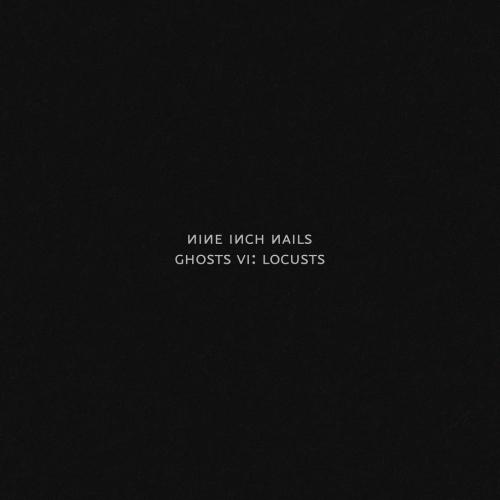
Ghosts VI: Locusts Nine Inch Nails
Album info
Album-Release:
2020
HRA-Release:
17.12.2025
Album including Album cover
I`m sorry!
Dear HIGHRESAUDIO Visitor,
due to territorial constraints and also different releases dates in each country you currently can`t purchase this album. We are updating our release dates twice a week. So, please feel free to check from time-to-time, if the album is available for your country.
We suggest, that you bookmark the album and use our Short List function.
Thank you for your understanding and patience.
Yours sincerely, HIGHRESAUDIO
- 1 The Cursed Clock 07:00
- 2 Around Every Corner 10:52
- 3 The Worriment Waltz 09:25
- 4 Run Like Hell 05:37
- 5 When It Happens (Don't Mind Me) 02:55
- 6 Another Crashed Car 02:23
- 7 Temp Fix 01:46
- 8 Trust Fades 03:12
- 9 A Really Bad Night 04:53
- 10 Your New Normal 03:45
- 11 Just Breathe 07:00
- 12 Right Behind You 01:42
- 13 Turn This Off Please 13:08
- 14 So Tired 03:44
- 15 Almost Dawn 05:34
Info for Ghosts VI: Locusts
"Ghosts VI: Locusts" is the eleventh studio album by American industrial rock band Nine Inch Nails. It was released digitally for free download on March 26, 2020, as a show of solidarity with the band's fans during the 2019–20 coronavirus pandemic. It is a sequel to the band's 2008 instrumental album Ghosts I–IV, and the immediate follow-up to Ghosts V: Together, which was released on the same day.
"Ghosts VI: Locusts" is the sixth installment in the "Ghosts" soundtrack series, launched in 2008 by Nine Inch Nails—a soundtrack for a movie that never existed. Released on the same day as "Ghosts V: Together," it was offered as a free download without prior announcement—music as a unifying element and a form of self-therapy in the age of COVID-19 and lockdowns. "Music—whether listening to it, thinking about it, or creating it—has always been the thing that helped us get through anything—good or bad. With that in mind, we decided to burn the midnight oil and complete these new Ghosts records as a means of staying somewhat sane," Trent Reznor and Atticus Ross wrote in the release notes. A perfectly understandable approach.
Music—whether listening to it, thinking about it, or creating it—has always been the thing that helped us get through anything—good or bad. Compared to "Ghosts V: Together," the sixth installment strikes a less conciliatory tone. After just a few bars, it's clear that "Ghosts VI: Locusts" would make a great soundtrack for a horror or psychological thriller. The basic ingredients are largely identical on both albums: piano and synthesizers dominate the soundscape, though here they're occasionally augmented by a mournful jazz trumpet and noisy guitar drones ("Around Every Corner") or groovy drums ("Run Like Hell"), which makes a huge difference in terms of tension compared to its sister album.
Ghosts VI: Locusts "Ghosts VI: Locusts" offers a wide range of soundscapes, from tranquil piano and synthesizer sounds ("Trust Fades") to distorted noise escapades ("Almost Dawn"), making it significantly more varied than "Ghosts V"—and stylistically closer to the first four installments or "regular" Nine Inch Nails albums. Unlike "Together," "Locusts" sounds very menacing for much of its duration due to its melodic structures and sound design, and is therefore certainly not the ideal soundtrack for everyone to enjoy with a good book and a glass of wine.
With its oppressive atmosphere, "Ghosts VI: Locusts" demands more attention from the listener than part five, but this also makes it a more enjoyable album. While it's a step closer to "The Slip," "The Bad Witch," or even "The Fragile," the comparison to the soundtrack work of Reznor and Ross, as with "Ghosts V: Together," is still apt. It's more ambient than industrial (rock). This shouldn't deter NINE INCH NAILS fans, and film music enthusiasts can certainly give it a listen.
Nine Inch Nails

Nine Inch Nails
Trent Reznor’s industrial outfit defined a generation of music, and, thanks to his melodic sensibility, brought the previously underground movement to the masses. Multi-talented songwriter, producer and musician Reznor has remained the one constant creative force in the band, performing the majority of the instrumentation for his albums in the studio, while employing a rotating cast of musicians for live shows. Initially based in Cleveland, the artist began performing shows under the pseudonym Nine Inch Nails, recording his first demo in the late ’80s. It wasn’t long before he attracted interest from record labels, and his debut, Pretty Hate Machine, was released in 1989. A critical and commercial triumph, widely driven by word of mouth, the album was embraced by the burgeoning alt-rock scene, its success driven by singles “Sin,” “Down in It,” and, one of NIN’s most popular hits, “Head Like a Hole.” Pretty Hate Machine went on to sell over four million copies, and had the distinction of being one of the first albums on an independent label to be certified Platinum by the RIAA. Following a long run on the road, including a slot on the 1991 Lollapalooza festival, Nine Inch Nails’ follow-up was eagerly anticipated by a legion of fans; they weren’t disappointed. 1994’s The Downward Spiral solidified Trent Reznor as a musical tour de force.
Reznor continued to record and tour as Nine Inch Nails throughout the ’90s and 2000s, racking up a considerable list of accolades and awards (including two GRAMMYs). His music had reached far beyond its industrial roots, as evidenced by the wide success of single “Closer,” which climbed a diverse collection of Billboard charts, including Modern Rock, Mainstream Rock, Dance and even the Canadian pop charts. Reznor’s GRAMMY nominated-song “Hurt” also brought him further into popular culture, and Johnny Cash’s deeply moving cover version of the song became a massive hit for the venerable singer-songwriter.
During this era, Reznor had also taken on the role of producer ̶ not only working with other artists, but also delving into soundtracks and film scores. By the end of the ’00s, the artist had firmly established himself in Hollywood, finding a prolific musical partner in producer and composer Atticus Ross (who became the only other permanent member of NIN in 2016). The two garnered an Academy Award for Best Original Score in David Fincher’s The Network, and continued to collaborate with the director, scoring such hit films as The Girl With the Dragon Tattoo and Gone Girl. As a producer, composer and performer with a steadfast vision, Reznor endures as an innovative and provocative figure, always striving to shatter his own creative boundaries.
This album contains no booklet.