

Archive
Biography Archive
Archive
was founded in London in 1994 by Darius Keeler and Danny Griffiths. The two musicians came from the electronic underground scene of the early 1990s and were heavily influenced by the trip hop wave from Bristol.
While acts such as Massive Attack and Portishead set the tone, Keeler and Griffiths sought their own approach to this new, dark sound combining hip-hop, electronica and orchestral elements from the outset.
For their debut album, they brought singer Roya Arab and rapper Rosko John into the studio. The result, Londinium, was released in 1996 on Island Records and is still considered an underrated classic of the genre. The mixture of atmospheric electronics, strings and political lyrics was well received by critics, but only found a small audience. After the album, Arab and Rosko John left the band, prompting Archive to reform – a dynamic that would continue throughout the band's history.
With their second album, Take My Head (1999), Archive underwent a radical stylistic change. Suzanne Wooder took over on vocals, and the sound was significantly more melodic, accessible and pop-oriented than on the debut.
ARCHIVE - YOU MAKE ME FEEL
Songs such as ‘You Make Me Feel’ (currently featured in the new Renault advert) attracted greater attention, especially in France and Germany. Despite their success, this phase was also only a snapshot. Wooder left the band, Keeler and Griffiths retreated back into the studio and developed the sound that would shape Archive in the long term: an epic, cinematic sound architecture that combined electronic elements with post-rock, prog and orchestral arrangements.
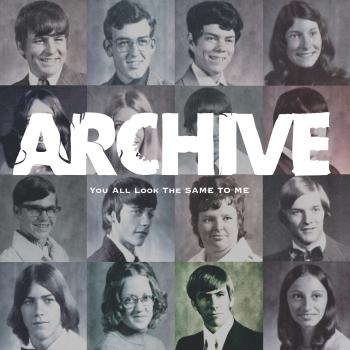
In 2002, You All Look The Same To Me was released, which is still considered one of their most important albums. With Irish singer Craig Walker, the band found a voice that perfectly complemented their new sound. The 16-minute opener ‘Again’ became the band's signature track, while songs like “Numb” and ‘Meon’ combined melancholic melodies with sprawling arcs of tension. During this phase, Archive evolved from a studio project into a permanent live band that quickly gained a growing fan base, especially in France and Eastern Europe.
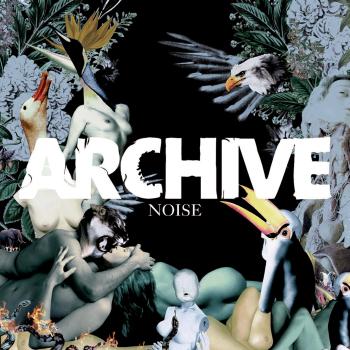
The following albums, Noise (2004) and Lights (2006), consistently continued along the same path. Noise was dominated by a dark, almost aggressive mood. The song ‘Fuck U’ became one of their best-known tracks – dark, vulnerable, intense. Lights relied more heavily on electronic textures, complex song structures and atmospheric arcs of tension. During this period, Archive established themselves as a fixture in the European scene without ever slipping into the mainstream.
With Controlling Crowds, a concept album released in four parts in 2009, the band reached a creative peak. The first release consisted of parts I to III, with part IV following a few months later. The entire work is characterised by a dark analysis of society, in which themes such as surveillance, alienation and digital control are central. The tracks oscillate between electronic minimalism and monumental opulence. Archive presented themselves here as a musical collective in which changing voices, timbres and moods were woven into a dense overall concept.
Archive - The Empty Bottle (Official Video)
After Craig Walker left, Rosko John rejoined the band. On the 2012 album With Us Until You're Dead, he took over vocals alongside Maria Q, Dave Pen and Pollard Berrier. This album also focused heavily on thematic coherence, but avoided simple song structures in favour of building tension and atmosphere. The band sounded more focused and at the same time more experimental than ever before.
2014 saw the release of Axiom, a project that was somewhere between a soundtrack and an album. The music was written in parallel with a short film that further explored the band's visual dimension. Archive had always thought of music and images as a whole, and with Axiom, this principle was consistently implemented. The film was performed live with the music at selected concerts, underlining the band's ambitions beyond classic album formats.
With Restriction (2015), Archive presented a politically charged album that increasingly opened up to danceable rhythms without abandoning their typical emotional depth. Tracks such as ‘Kid Corner’ and ‘Ruination’ addressed social issues that were to become even more acute in the following years.