





Dresdner Kreuzchor & Martin Lehmann
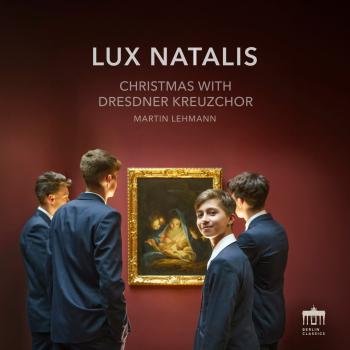
Biography Dresdner Kreuzchor & Martin Lehmann
Dresden Kreuzchor
The magic of bright, clear boys' voices, pure choral singing, and the passion of these young performers create a sound that is impossible to resist—a sound that touches the heart. Through its music, the Dresden Kreuzchor bridges tradition and modernity; it nurtures the cultural heritage of its home region, breathes new life into it, and carries it forward into the present day.
For centuries, the Dresden Kreuzchor has moved audiences with its singing, drawing crowds to the Kreuzkirche on the Altmarkt to hear the *Kruzianer*—as the choir members are known—perform. It is here, in the heart of the city, that the roots of this boys' choir lie—a choir that has shaped the cultural life of Dresden for over 800 years.
Then as now, the liturgical calendar sets the rhythm for the "Kruzianer’s" church services, vespers, and *Metten* (early morning Christmas services). The tradition of the vesper—an ecclesiastical service lasting about an hour—has been observed continuously since 1371. The "Mette" on Christmas morning is another cherished custom: early in the day, people line up outside the Kreuzkirche, eager to experience the "Kruzianer’s" traditional Christmas morning performance.
The Dresden Kreuzchor is a vibrant community, open even to boys who do not belong to any church or religious denomination. The choir is a welcome guest far beyond the borders of Dresden; through their concerts, the "Kruzianer" share their music with the entire world.
Martin Lehmann
Since 2022, Martin Lehmann has served as the 29th "Kreuzkantor" (cantor of the *Dresdner Kreuzchor*), a role in which he acts as both the general manager and artistic director of the oldest cultural institution in the capital of Saxony. His tenure bridges tradition and innovation; his repertoire spans a wide spectrum, ranging from a cappella choral music and large-scale choral-orchestral works to the premieres of contemporary compositions. A key programmatic focus during his initial seasons as *Kreuzkantor* has been the works of his predecessors—earlier *Kreuzkantoren* who were also accomplished composers. Furthermore, he is continuously expanding the *Kreuzchor’s* vesper repertoire by regularly commissioning new settings of introits.
From 2001 to 2005, Martin Lehmann directed the *Schola Cantorum Leipzig* girls’ choir, before moving on to become the musical director of the "Wuppertaler Kurrende". In 2012, he assumed the role of artistic director for the renowned "Windsbacher Knabenchor" (Windsbach Boys’ Choir). During his ten-year leadership, the choir made regular guest appearances at major international festivals and in prestigious concert halls, including the Concertgebouw in Amsterdam, the Palau de la Música Catalana in Barcelona, the Oriental Arts Center in Shanghai, the Elbphilharmonie in Hamburg, and the Tonhalle in Zurich. In recognition of his contributions, the Evangelical Lutheran Church in Bavaria appointed him *Kirchenmusikdirektor* (Director of Church Music) in 2017.
Martin Lehmann has collaborated with renowned ensembles such as the Sächsische Staatskapelle Dresden, the Dresden Philharmonic, the Vienna Symphony, the Konzerthausorchester Berlin, the Stuttgart Philharmonic, and the WDR Big Band. In the field of historically informed performance, he has also worked with the Freiburg Baroque Orchestra, the Dresden Baroque Orchestra, and the Akademie für Alte Musik Berlin. An extensive discography documents his diverse body of work. Most recently, in April 2025, a recording of Poulenc’s "Gloria" and Schubert’s Mass in A-flat major—performed by the Dresdner Kreuzchor and the Dresden Philharmonic—was released by Berlin Classics. This was followed in May 2025 by the release of a live recording of the world premiere of Sven Helbig’s "Requiem A," featuring René Pape, the Dresdner Kreuzchor, and the Sächsische Staatskapelle Dresden, issued by Deutsche Grammophon.
Born in 1973 in Malchin (Mecklenburg-Western Pomerania) and raised in Dresden, Martin Lehmann began his musical training as a member of the Dresdner Kreuzchor. He went on to study choral conducting at the Carl Maria von Weber College of Music in Dresden under Hans-Christoph Rademann—serving as his artistic assistant with the Dresden Chamber Choir, an experience that proved highly formative—and subsequently founded the chamber choir cantamus Dresden.