




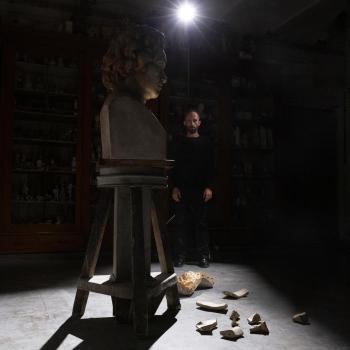




Musina

Biographie Musina
Musina Ebobissé aka MUSINA
has established himself as a distinctive voice in contemporary jazz, both in France and across Europe. Through a prolific artistic activity, he has developed a highly personal musical universe that unfolds through his work as a bandleader as well as through numerous collaborations as a sideman. He has notably shared the stage with artists such as Kurt Rosenwinkel, James Morrison, Electro Deluxe, and performs regularly throughout Europe and internationally with a variety of ensembles. He currently leads several projects, including Musina (quintet, quartet, and trio) and the solo ambient project Blendreed, while also performing with ensembles such as Ozma, Mathias Ruppnig’s FOAM, Morse.s, and other collaborative ventures.
Born in 1990 in Strasbourg (FR) to a French mother and a Cameroonian father, he grew up in a rich musical environment shaped by African diasporic music and African American traditions. After studying at the Conservatory and the University of Strasbourg, where he earned a Bachelor’s degree in Sociology, he moved to Berlin to attend the Jazz Institut Berlin. There, he completed both a Bachelor’s degree in Jazz and a Master’s degree in Composition. Immersion in Berlin’s vibrant music scene fostered an artistic practice that is both rigorous and open-minded, grounded in dialogue, experimentation, and continuous research.
Based in Paris since 2020, Ebobissé has become an active presence within today’s jazz landscape. His music, constantly evolving, explores the tensions and intersections between forms, rhythms, and intensities. It draws equally from the energy of 1960s jazz, the impressionistic textures of the early twentieth century, and elements borrowed from rock and contemporary music. From John Coltrane to Radiohead, through Claude Debussy, Jeff Buckley, Miles Davis, and Brian Eno, his influences span a wide artistic spectrum whose underlying coherence he seeks to reveal.
His compositions can be understood as sensitive sonic spaces, where melodic lines and rhythmic dynamics interact through a delicate balance of tension and contrast. Improvisation occupies a central role within this framework, serving both as a means of exploration and as a way of giving life and presence to the music.
Through this approach, Musina Ebobissé seeks a fertile point of tension between introspection and connection, between structure and freedom. Sound thus becomes a space for perception, transformation, and shared experience.